Showing posts with label Helps and Resources. Show all posts

Tuesday, January 21, 2014

January Pinterest Project | Scrub Pants

I've been a nurse for about 19 months. And I've FINALLY gotten around to making some adjustments to my scrubs to make them a bit more user-friendly.

You see, I have virtually no diversity in my scrubs. Some nurses have HUNDREDS of scrub tops that they've collected over the years. Solids, prints, holiday themes, you name it. When it was time for me to branch away from my nursing school scrubs, I wanted to wear solid colored scrubs. I wanted the tops and bottoms to be the same color. All black, or all pink, or all blue.

I started looking for scrub tops I liked. I struggled. I'm petite and am definitely not flat chested. I didn't want my scrub top to hang long and I didn't want it tight either. So I found a top that I liked made by Cherokee. It's a mock wrap style (#4800). What I liked is that it's only 23.5 inches long. Other styles are much longer. It was the shortest scrub top that I could find. Score. I own nine different colors and there are plenty more colors I could buy, if I wanted.

When I looked for the coordinating scrub pants, I bought a couple that I thought would work, but eventually was unhappy after about a month of wearing them. The fabric was kinda rough and the drawstring waistband seemed to get loose over the course of my shift and I feared being one of those nurses bearing her butt crack to the patient, their family and my peers. I can't stand seeing professional nurses showing off crack. So no go. Those three pairs are hanging in my storage closet never to be worn again. Not sure why I'm holding on to them.

So it was back to shopping for scrub pants. Unfortunately, I couldn't find matching scrub pants to coordinate with the various colors of my tops for the solid top to bottom look, so I decided to go with black bottoms (or navy) and colored tops.

I was at Super Shoes and discovered they carried petite scrub bottoms by Peaches. I fell in love!  The reason I love them is for the waistband. They are still a drawstring style but have a ribbed knit waistband that is very soft and comfortable and there's NO butt crack during those inevitable squatting moments of nursing. They are awesome!  Plus they come in Petite and so no hemming! Yay!

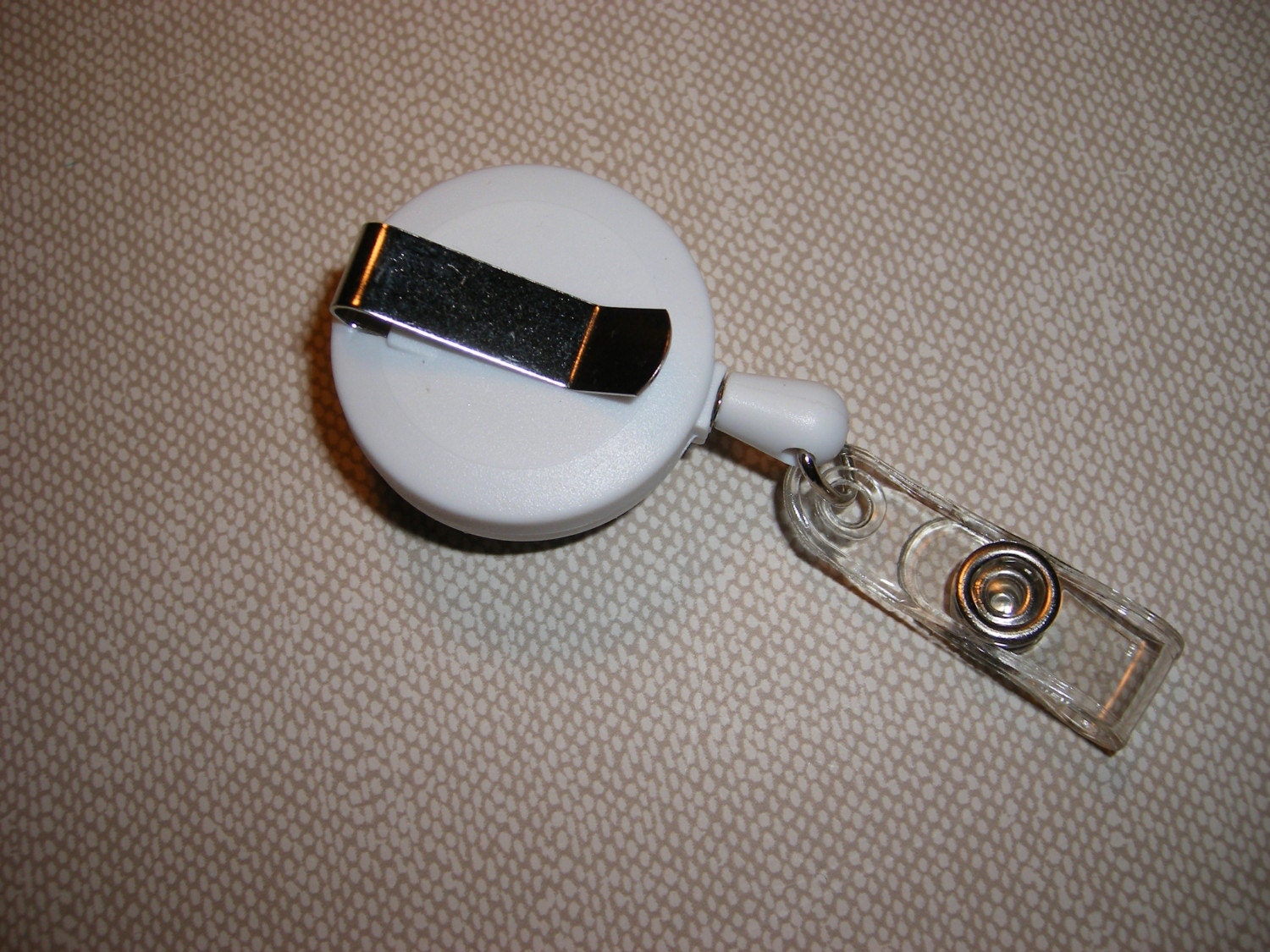
Anywhoo... I love these pants, but over the past 18 months I have found some downsides. First off, there was no scissor hook. The scissor hook holds your scissors, which means you don't have to put them in your pocket.  I avoided the whole scissor-in-my-pocket thing by attaching a retractable badge holder around one of the scissor handles and clipped them to my side pocket. When needed, I just grab my scissors and pull to whatever I'm cutting...and when done they retract back. I've never lost a pair of scissors!  But I found that I didn't like that my scissors banged against my leg as I walked down the hall.

Secondly, the side pockets (near knees) on these scrub pants are pretty big. They are about 7" deep and 6" wide. Not only do I have to bend over to reach into the bottom of my side pockets, but my penlight and markers end up laying sideways at the bottom. Sometimes I found bruises on my thighs where my markers had pressed in while I was sitting down. Ugh.

So I decided that it was time to fix these minor inconveniences. So here's what I did:

#1. Scissor loop added. Now, mind you, these are not my nursing scissors! I just tucked my sewing scissors in so you'd see how the loop worked. My medical scissors are much smaller. I will still continue to use the retractable badge holder clipped to the pocket above, but now my scissors won't bang my leg as I walk down the hall or get tangled up with IV tubing!  Many scrubs already have this loop attached, but again, I liked the waistband on these scrubs more than I wanted a scissor loop...and it was NOT hard at all to attach the loop.  For those of you who know me, you already know I have a love for plaids and tartans. You can pretty much tell that from my blog design. hehe.  Anywhoooo, I found some scrap plaid fabric that I kept when I converted a plaid flat sheet to a fitted sheet. I used a piece of scrap that was already hemmed on one side, cut up 6 little loops and made it a bit more tidy and tacked the loop on to my scrub pants with just straight stitches on either side. I attached the loop just above the right side pocket (I'm right-handed) at a position that worked with the retractable ID holder length. Very customized. 

The plaid loop is fun (for me), but could also be mistaken for a brand label (about the same size).  I decided to just attempt this on one pair of scrub pants at first so that I could try it out at work to make sure I had it positioned right and that it would work how I expected. I'm THRILLED. I love the plaid and it's nice to not have my scissor banging on my leg or catching on various things! YAY!

#2. Pocket modified. My highlighter, dry-erase marker, permanent marker and pen light are kept in my left side pocket (near knee). I don't need them as often, as say a writing pen--which is kept in my scrub top pockets.  First, I raised the bottom of the pocket to a more appropriate level by straight stitching a horizontal stitch from one side of the pocket to the other based on the height of my pens. Second, in order to keep the pens upright in the pocket, I sewed a vertical stitch up the middle of the pocket thus dividing the pocket into two smaller pockets. No genius here folks...just common sense.

I'm so glad that I went ahead and got this Pinterest Project done at the beginning of the year and didn't wait any longer! I LOVE my modifications! YAY!


Friday, July 20, 2012

Reflections on My NCLEX Experience

As promised, here are my thoughts, tips and suggestions related to NCLEX.

Testing Location | The Lynchburg, VA PearsonVue testing center was AWESOME! Relatively easy to get to and the two women staffing it were very kind and friendly. I am so glad that I switched from the Richmond location to the Lynchburg location. Rumor has it the Richmond location has room for over 50 people to test at their center (maybe even 75?), whereas the PearsonVue testing center in Lynchburg has room for only NINE people. While smaller does mean there are fewer available spots/times available on the schedule, the reason that smaller is better is that there are far less people making noises and creating distractions during the exam. PearsonVue administers over 100 different types of tests/exams and so there's no telling who you will be seated next to. Some of these other tests/exams require essays, so there could be extensive typing noises -- imagine that in a room with over 50 people. While waiting to be registered/admitted to the exam room, I learned that the nine of us were all scheduled to take the NCLEX-RN exam...so minimal noises coming from each mouse. PearsonVue sites offer earplugs...so take advantage of them if you are stuck testing at a location with lots and lots of people.

Scheduling/ Time of Day | When I signed up for the Richmond testing site, the only available time was 8am around the dates that I was looking for. Since it was going to take me about 1.5 hours to get there...plus I needed to be there at least 30 minutes early... I was looking at trying to leave my house at 6am (at minimum)...and so that meant waking up at 4:30am. Uh, no thanks! I could've gotten a hotel room... but who wants that extra expense and the possibility of a poor night's sleep in an unfamiliar, possibly noisy environment? So I was really happy that the Lynchburg site had an afternoon slot available when I checked their availability.

Scheduling/ Day of Week |  I did enough research in advance, that I learned that it's best to schedule early in the week and not right before a holiday. The reasoning is that you don't want to have to wait any longer than necessary to get your results. After taking the NCLEX, all you can think about for the rest of day is whether you passed or not. Do you really want to wait all weekend? Probably not. In Virginia, you are supposed to be able to call a phone number and get results the next business morning if you used your social security number at the time you applied with the Virginia Board of Nursing. Being the ever-conscientious me, I didn't want to use my SSN and therefore used my driver's license ID number to apply for licensure. I discovered several weeks before my exam that I'd have to wait until the second business day after my exam to find out my results over the phone.  WHAT I DID:  I scheduled on a Friday. Yes, exactly what I don't recommend. But my options were limited and my priority was to get an afternoon slot - even if I was going to have to wait all weekend (and possibly longer) to get my results. WHAT HAPPENED:  Well, I got my results on Monday via the Virginia Board of Nursing's website (so much for having to wait a second business day!) I also was not freaked out all weekend primarily because I was distracted with the big storm that blew through our area. The derecho hit Friday night and out went my lights, water, air conditioning, internet, etc... So I ended up packing up and heading over to my parent's house (45 minutes away) on Saturday to avoid the unrelenting 100+ degree heat. So I was at my parents house all weekend and the disruption to my normal routine was all the distraction I needed. And it was fun to be able to get my NCLEX results and be able to tell my parents right away and in person. So it worked out for me, but I'd definitely recommend scheduling for early in the week (also avoiding holidays like Memorial Day or July Fourth).

Mock Run |  I totally recommend doing a dry-run to the testing site. Ideally done at the same time of day and same day of the week that you are scheduled to test. I planned to go the Friday before my Friday exam, but something came up and I couldn't. So while I still made the drive (using Googlemaps and my GPS for directions) and got a rough idea of the time it would take and knew I could find the location, I still didn't absolutely know the timing on a Friday afternoon. However because my test was at 2 pm and I knew it would take roughtly 1.5 hours, I decided I would eat lunch in Lynchburg in advance of my test, and allowed myself an hour to do that-- which provided plenty of buffer time in case traffic was bad (accident) or if there was unexpected/new road construction. Another girl from my same school did not do a test run and she arrived several hours ahead of time to make sure she could find it... and then proceeded to camp out at the testing site. Boring, stressful, etc... I arrived 30 minutes before my assigned testing time - as instructed - and I was glad that I was not any earlier. A lot of the girls taking the test with me were really anxious and stressed out. You generally want to avoid that - it's not going to help you stay calm. If you arrive early...just wait in your car (unless a 100 degree day like it was for me!).

Here are some other thoughts:
  • Take the Kaplan course, or at least buy access to Kaplan's Q-Bank. Doing 50+ questions in one sitting builds endurance. And you will need endurance for the NCLEX!  I feel that Kaplan's Decision Tree was very helpful--especially when I wasn't sure of the answer. And I'm not sure I would've really understood or used the Decision Tree if I had had to learn it myself. I'm SO GLAD I took the Classroom Anywhere (online) class!  I did not complete every QBank question, only about 750-800 qeustions. I simply ran out of time, but I did do all the QTrainers. While taking the Kaplan course, I posted about my experiences each day: Day One, Day Two, Day Three, Day Four, and then posted my scores here.   Also, Kaplan's QBank and Qtrainer formatting and questions look EXACTLY like the NCLEX. So while taking NCLEX...you can calm down and pretend you are just doing Kaplan questions. :)
  • Take NCLEX before starting your RN job. Starting may not even be a possibility for you as some hospitals require that you get your license before you start orientation (too expensive to begin orientation of a new grad only for the new grad to fail NCLEX). My hospital is not that way, they are willing to allow new grads to start without their license (which is permitted by the state of Virginia, of course!) Yet I knew myself enough to know that I would feel better having it out of the way. Orienting to a new job is stressful enough, not to mention 12 hour shifts! I'm relieved to have it behind me and to be able to start orientation without having NCLEX hanging over my head. However, I understand that some folks need to start work right away because of finances and in that case... just make a plan for studying for NCLEX. Pick a test date and work towards it...don't put it off. Get it over with as soon as possible.
  • Before exam day, READ all materials on the PearsonVue and NCSBN sites related to NCLEX and testing center...especially the rules. No sense in being caught off guard that you can't chew gum during exam or that you cannot take lip balm in with you! No surprises...take responsibility and know the do's and don'ts and what to expect! 
  • Don't study/cram the day of your exam or even the day before your exam. I found this particularly helpful in de-stressing. Reality is that you only know what you know. No amount of cramming is going to help! Also, looking back, there is NOTHING that I would have chosen to study that would have helped me on any of the questions! The material is to vast to even have a clue what you should cram for!
  • Take deep breaths from time to time. There were times when my eyes glazed over while taking the exam and I ended up re-reading several questions multiple times - simple because I was having a hard time focusing mentally! I was aware of every little thing: the clock, the video monitors, the audio recording (yes, they do audio recording of you taking your test!) and the sounds of other test takers... and of course the voices of your head saying "what happens if I don't pass?" (despite trying to avoid that type of self-talk). So when I would catch myself being distracted, I consciously took a few deep breaths and tried refocus.
  • Select your answer, then REREAD the question. No sense in getting a question wrong because you failed to read the question correctly. One of the things that doing endless Kaplan questions does -- is that it reinforces the need to really understand what the question is asking. It is looking for a positive or a negative answer? Is it looking for a psychosocial answer rather than a physical answer? While doing Kaplan I regularly went back and reviewed the questions that I got wrong and there were always a few questions that I failed to read the question correctly.
  • The PearsonVue Trick (PVT) DOES work. Essentially by trying to sign up to take the NCLEX again, you can find out if you passed or not. I did the PVT trick within an hour of taking my exam. Here was my "good pop-up."  You can read more about the PVT here. 
  • Other thoughts about NCLEX that I posted are here and here.
I hope there's something here that you might find helpful. I can only talk about it from my point of view and to   point out what I've read online (mostly at allnurses.com) that influenced me and my experience.

Whatever you do... keep a positive attitude. It will take you far and reduce your anxiety about NCLEX! Best wishes for those who still have NCLEX on the horizon. You can do it!

Wednesday, July 18, 2012

Scrubs for Your Body Type

Stumbled upon an online tool by Scrubs Magazine to help you figure out the best scrubs for your body type. Find it here.   Guess I'll be sticking to plaid shoes or hair ties and not plaid scrub tops.

Scrubs Magazine also has interesting articles too. You can follow this link to their current edition. And be sure to scroll through archived articles for other interesting reads.

Off to go scrub shopping (again). 

Shift Work

Since it looks like I will be working the night shift once I get off orientation, I have been doing a little research trying to collect info, strategies and tips for working nights. I've been adding some links regarding working night shift to the "NEW NURSE LINKS" on the side bar - mostly for me to go back and read.

My hospital organizes a couple mini-retreats for new grads throughout our first year of nursing. My understanding is that one the topics at the retreats is sleep and/or night shift issues! Obviously the nursing admin is interested in patient safety issues and want to address issues that affect job satisfaction, but they also want to keep us medically and mentally healthy too. I'm nervous about the health aspects, but also about effect it will have on my social life. Is this going to be one more obstacle to dating? 


Thursday, July 5, 2012

Thinking Ahead

Found this article "Tips for Your First Year as a Nurse" and it definitely has some helpful tips...even includes her 12 hour day shift routine.  Think I'll post this on my side bar links.

I'm looking for other articles. I'll keep posting as I find them.

Wednesday, April 25, 2012

NCLEX Strategy: Just the beginning

* WARNING * This is a LOOOOONG post. I will be amazed if any of my non-nursing friends actually make it through the entire post. If you aren't in nursing school, this will probably be lost on you.  And if you aren't a S-T-J or aren't devoted to the theories of Myers-Briggs personality typing, you may think me insane. I am not. I am simply an X-STJ who is "...extremely talented at devising systems and plans for action, and at being able to see what steps need to be taken to complete a specific task."  Yep, that's me in a bullet point. However, here's my horrible, deep, dark secret:  I can devise plans and see what steps need to be taken, BUT I am also the worst offender of procrastination! The worst. But here marks the beginning of my strategy for studying for NCLEX!  (Feel free to stop reading here).

I've been doing some research regarding NCLEX prep and various strategies. Most of my research has been done via reading discussions/postings on AllNurses.com (a GREAT discussion site for nursing information in general). You can spend ALL day reading about what people have found helpful and not helpful (and sometimes there's little consensus --as what works for one person, doesn't work for another). It really comes down to knowing yourself, what you need and how you best study, but this site does provide helpful information/tips from those who have taken NCLEX and passed and those who have taken NCLEX and failed.

I don't have a strategy or plan yet for studying and I'm not actually going to sit down and really think strategy until I'm DONE with my actual classes and have graduated. But I thought I'd list out the resources that I expect that I'll be using to study/prep for NCLEX.

Saunders Comprehensive Review (4th/5th ed): During school I used the 4th edition and found it VERY helpful during school as I studied for tests. The content review is EXCELLENT and it has good NCLEX questions (along with CD allowing for focused review in the computer format (like the NCLEX). Every Q&A comes with rationales/strategy for how to figure out answer. I haven't purchased the newest edition yet because it's another $50 and I still don't have a definitive answer as to whether the NCLEX questions are any different from 4th edition to the 5th edition. However, I've read online that there is additional content in the 5th edition. I may still buy this. But this book gets RAVE reviews on allnurses.com for content and NCLEX questions (that's why I bought 4th edition for use during nursing school).

The CD also has an assessment test that will help determine weak areas and will create a recommended study plan based on how much time you've got to study before the NCLEX! Helpful.

Post-NCLEX thoughts: I did not end up buying the updated edition. I really didn't even use Saunders after graduating. I still wholeheartedly recommend it for nursing school. I simply did not have enough time to use Saunders in addition to Kaplan. Also Kaplan suggested not doing more than 150 questions a day so that proper attention could be given to reviewing the Kaplan questions rationales. Kaplan provided plenty of tests and questions...that I did not need more!

LaCharity's Prioritization, Delegation and Assignment (2nd ed): This too has been recommended on AllNurses. Prioritization and delegation questions can be challenging. I will certainly benefit from doing practice questions focused on PDA. 

Post-NCLEX thoughts: I did the first few chapters, but the Kaplan course really gave me the knowledge I needed to be able to answer the prioritization, delegation and assignment questions. Nursing school did not prepare us at all for these type questions. And Kaplan really helped. If you cannot take Kaplan, this is still an excellent resource.

Saunders Q &A Review Cards (1st ed) and Mosby's Review Cards (2nd ed): I've ordered these and I'm hoping that the Saunder's pack has different questions than what's in the 4th/5th editions of the Comprehensive Review books. These are not really flash cards because the paper is on the thin side (or so I've read). I plan to bundle these based on topic/content, hole punch them, put them on rings and then take them with me to the gym. I'm a little concerned about how they'll hold up as they'll probably hang out in my gym bag, but I might have to get creative in how I store them -- otherwise the thin cards will quickly become dog-eared and a bent up mess.

Post-NCLEX thoughts: I took full advantage of these cards! I did hole-punch them and put them on rings and it worked out GREAT! They held up fine, as cards did not sit around long in my purse or bag...I pretty much whipped through them quickly and returned the completed questions back to the box. I highly recommend either of these sets. I primarily used these between graduation and when I took the Kaplan course. I did manage to continue to use them after my Kaplan course, but pretty much only when I was at the gym.

Kaplan : Background: My program initially required my cohort to purchase ATI, but there were some problems with ATI's contract/agreement. So they cancelled ATI and contracted with Kaplan for this year. The first year students were required to purchase Kaplan, but the second years (my class) were not - because we'd already paid for ATI (but lost access when we cancelled). But because my school is contracted with Kaplan, I knew I could get a better deal which would INCLUDE a review course through Kaplan. So rather than paying $499 through Kaplan's website, I paid around $375 when purchased through my school. When I signed up for Kaplan through my school, they gave me a copy of "The Basics" book which is basically just content in outline/bullet format.  No NCLEX questions-- just content.

My purchase of Kaplan through my school allows me to sign up for one of their review courses. They have three basic formats for their review course. The course, whatever the format, is focused on teaching Kaplan's approach to answering NCLEX questions using their "Decision Tree."  During the course, their method is applied to various subjects (straight from Kaplan's website: Pharmacology/Reduction of Risk, Reduction of Risk/Physiological Adaptation, Physiological Adaptation/Basic Care & Comfort/Mgmt of Care, Management of Care/Safety and Infection Control, Safety and Infection Control/HMP/Psychosocial). There's no content or systems review done during this course, at least from what I've read from others who have taken the course. It's been rumored (but I'm NOT for sure) that there are some body system/content videos available if you sign up for one of the 3 review courses. If you buy one of the Kaplan review courses, you also get access to their question bank, online practice tests and diagnostic/readiness tests. If you want more info, go to Kaplan's website and also visit AllNurses.com and search Kaplan for a variety of reviews and perspectives.

Here are the three formats for the Kaplan Review Course. (OMG. Are you still reading?)

"Classroom Review" - this format takes place in a live/classroom setting. We no longer have a Kaplan location in my community, so I would have to travel to Richmond or DC to do this. It's 21 hours of teaching over the course of 1 week or weekend, or two weeks or two weekends. It allows you to plug in your zip code. But in order to find something further away, I have to plug in zip codes in those areas to have them come up. I have read plenty of negatives about the live classroom sessions--so I do not plan to do this (I initially thought I would because I knew one of the instructors--but since they closed our center, she's not teaching it anymore). Direct from Kaplan, this runs $499. Post-NCLEX thoughts: I had two friends who did this live course in Richmond the week after I did my online course. They were disappointed. The teacher ran through questions and answers and did not allow adequate time for the students to actually READ the questions for themselves and to formulate an answer. She basically read the question and then told them which was the right answer and why...did not really give them time to practice what they'd learned. They got out of class early EVERY DAY because the teacher rushed through the material. While I'm sure many of the live instructors do much better than this lady, there's no telling what teacher you'll get (perhaps just avoid the Richmond classes?)

"Classroom Anywhere" - this is live setting also, but it's done from convenience of your bedroom, office, library, or wherever you've got internet access. Because these are still live teaching sessions, you have to clear your schedule to attend the online classes. Schedule is similar to the live settings. You can choose to get the 21 hours of instruction during early, mid-day or evening over the course of 4 or 8 days--depending on the schedule they offer. Because this course runs similarly to a classroom setting, there is a chat feature and there are TA's that can help answer specific questions, so as to not interrupt the entire online class. Direct from Kaplan, this runs $499. This is the likely format for me. Now I just have to pick the dates/schedule that I prefer. Right now I'm looking at late May or early June. Post-NCLEX thoughts: Chose this one. Highly recommend! My instructors were great! They gave us tons of helpful hints (even in written form for us to copy-paste off the classroom site!) Each day during Kaplan, I wrote down my thoughts.  You can search Kaplan using the search box above to find all my Kaplan-related posts, or you can simply go look for my archived posts from May 29-June 1.

"On Demand" - these are prerecorded "classes" - and you chose WHEN you want to watch them. There's less accountability to getting them done and it would be easy to procrastinate and possibly never get around to doing them. I'm not sure if this format has the content videos or not, as it's not entirely clear from the people discussing it online. Because I have a real issue with procrastination, this format is not ideal for me. I think I need the accountability of the live schedule. Direct from Kaplan, this runs $418.

There are TONS of other resources available online for NCLEX prep. Someone on AllNurses.com has even posted a helpful (yet disorganized) NCLEX Study Guide with tons of mneumonics and tricks to help with remembering, along with things to remember to study (lab values, meds etc...).  I also like the ABCDZ Strategy that someone posted (follow link and scroll down to it).

So... these are the resources that I plan to use. I will definitely need to develop a strategy and schedule of how, when, and in what order or combination I will use these resources. I may start with the Kaplan review course and based on how that goes, develop a study plan/schedule. Some folks online suggest 100, 200, 300 NCLEX questions per day. I think I could manage a 100-150/day. Not sure I could manage 300 per day. I've heard that with Kaplan, they provide a suggested study schedule/plan based on how far out your are from taking the NCLEX. Six week plan, four week plan, two week plan.  I've also heard, statistically speaking, that taking the NCLEX more than 45 days after graduation leads to far higher failure rates.  Of course I don't have a source for that...but it seems reasonable enough.

Here is a sample plan of study posted on the Kansas Organization of Nurse Leader's website. There's also an interesting list of questions recommended be posed to students who failed and are retaking the NCLEX (it sounds like they are recommending 3,000 NCLEX questions before taking NCLEX--Good to know!). They've got a handful of other good resources here--even article about foods that can help with memory/learning! When you get to the website, follow KNEP Commission link on left sidebar > Graduate Nurse Toolkit > Graduate Nurse Index... you might find some helpful articles/resources... Check it out.

I've heard from nursing faculty and possibly somewhere else, that there's a correlation between GPA and pass/fail of NCLEX. I've done a search of academic nursing journals online and can't find anything recent or specific. But my nursing school GPA is around 3.75. And if you take into account A&P, Developmental Psychology and Microbiology (all required prereqs taken a year within starting school), I have a 3.8 GPA. I have consistently tested well in nursing school. I've never missed a question because I didn't understand the question, it was 99% me not knowing the content to be able to answer the question (lab values). So because of that, I'm not too worried about NCLEX style questions. Rather I'm more concerned about my retention of information related to diseases and pathophysiology. It feels like every semester I pack my head full of information only for it to leak out the next semester. Ack!  My nursing school has just recently changed their minimum requirements for passing nursing courses. For us, it used to be that you had to earn at least a 75% or higher to pass a class (and stay in program) but now it's 80%! And I think they've also changed the grading scale as to what is considered an A, B, etc... So things just got tougher!

So after graduation, I will work on my NCLEX prep strategy. What's my goal date for NCLEX exam? When is Kaplan available and when do I take it? How many weeks do I have to study? How many days a week will I study? How many hours a day? How many NCLEX questions/day? WHERE will I study (home? campus? library? coffee shop? Study Center?) and what time of day will work best for me? Study partner/ no study partner? What about an accountability partner? Who would that be? How would that work?

Overwelmed? Not at the moment, but without a plan I am certain to be quickly overwelmed and certain to procrastinate! I have a few days between graduation and my trip to Ohio that I can sit down and really sketch out a preliminary plan. I think I just saw May and June slip away :( Boo hoo hoo!

And if you are a lurker here who is in nursing school or graduating and thinking about the NCLEX, I hope you've found some helpful resources or links. Leave a comment and let me know!

Update 20 July 2012 |  So what actually happened?
Graduated May 11 | Kaplan Course May 29-June 1 | NCLEX on June 29 and PASSED at 75 questions! If you scroll to the bottom of this post, you can click on the NCLEX label and it should pull up all other NCLEX-related posts.


(I don't drink coffee, but there are times when I wish I liked it.)


Tuesday, April 17, 2012

$390 Investment

Just forked out $190 for application to be licensed as an RN in the state of Virginia. Then forked another $200 to Pearson Vue to register to take the NCLEX exam (nursing boards).  But hey, what's $390 when it holds the key to an RN job????

I can't apply for an NCLEX testing date until after my school sends an official transcript declaring my degree in nursing to the Virginia Board of Nursing (Va BON). I've heard that the time from graduation until paperwork is dealt with at the VA BON is about 30 days. Then once I've been deemed as a valid candidate, I'll get more information as to signing up for specific testing date.

I'll be taking an intensive prep/review course through Kaplan prior to taking the NCLEX...but since I don't know when I'm taking the NCLEX, it's a little hard to be strategic about when sign up for the review course. And lucky for us...they no longer offer Kaplan courses in our town! So now it looks like I'll be heading to DC (where my sister lives) or to Richmond.

**For those of you lurking here because you are in nursing school or applying to nursing school, this NCLEX book has been an awesome addition to my study materials DURING nursing school. A great investment. Not only are there loads of NCLEX practice questions...but the book provides a comprehensive subject review for each body system (skin, cardiovascular, respiratory) and other related content (pediatrics, maternity, psych). For each body system chapter, there's loads of great content including assessments, signs/symptoms, diagnostics, disease processes, medications and treatment info...pretty much the same content you are getting in your lecture courses in nursing school...but in a more condensed, no nonsense fashion. Then at end of each chapter there are NCLEX questions for that section--which is a nice way to test content knowledge in preparation for tests. I've known some students who have skipped their textbooks entirely and studied directly for lecture tests from a similar NCLEX prep book. I do not recommend this... but rather highly suggest it as a good supplement for test prep.  FYI- the pictured version is what I have, but I know there's a more recent edition on the shelves (green book, I think).

Cheers!

Friday, September 23, 2011

Another Cardiac Arrhythmia Video

In honor of getting through the week with tests in BOTH lecture courses...and getting a B on the Psych test and an A on the Med-Surg test (Cardiac focus), I will post yet another Arrhythmia video. Now it makes a bit more sense to me after having spent the past four weeks focused on Cardiac. Enjoy:


Next in Med-Surg comes Neuro. Time to bring out those Cranial Nerves again!

I'll post this weekend if I get a breather and tell you about my new study strategy for tests...

Wednesday, March 23, 2011

Cardiac Arrhythmias Simplified

I found this rather amusing video that provides a very simple, yet effective explanation of cardiac arrhythmias. There is no sound. Just hit play and fast forward to the 50 second mark to bypass the intro/credits.


We are learning cardiac meds at the moment...or rather being tested on them.

Thursday, February 24, 2011

Incentive Spirometer

I love incentive spirometers...it really is positive reinforcement for our bedrest or post-operative clients.

I found this video on proper use of the Incentive Spirometer very helpful. Only wish we had opportunity to have video demonstrations avaiable for our clients in the hospital. I know that PT/OT provide training initially, but nurses do need to reinforce correct usage.

Monday, November 29, 2010

Aging Populations | Something to Watch

For my Fundamental class, on our section on caring for the aging adult, we were required to watch a video produced by PBS titled "Living Old". http://www.pbs.org/wgbh/pages/frontline/livingold/view/.  It's 60 minutes long. I totally recommend it. It's not an easy watch by any means. Definitely sobering and thought-provoking. Statistics say that by 2030 (20 years away), over 20% of our population will be over 65 years of age.  I think this PBS special definitely discusses some of the relevant issues surrounding this topic. It's NOT a nursing video...it was written for the general public, but there are healthcare providers, family members and members of this aging population that were interviewed.

I'm 36 years old. My parents are in their early to mid 70's... I certainly have wondered/thought about what the next 10-15-20-25 years will look like. What is it going to look like for my parents as they age and their bodies become less efficient and less robust. My parents became vegans over 10 years ago and they certainly believe this is going to help them stay strong, healthy and help prevent chronic disease or cancers from stealing their years.  Thank God, they are strong and healthy now (they brag they are not on any prescription medications), but that doesn't protect them from the unexpected (car accident, serious fall/fractured hip, back injury...) which could potentially impact their ability to manage their ADL's (activities of daily living) and remain independent. They certainly expect they will remain independent a long time. I just pray that is the case...

Interesting statement was made in this PBS program, the gist was that if you have three or more daughters and/or daughters-in-law ---chances are that you may be able to avoid going to live in a nursing home. My parents did well to have four girls. I've always said that having children seems like a pretty good retirement plan. ;-)   At this rate, I'm WAY behind...but not much I can do about it in my single state. I suppose someone better mention to my four nieces and nephews that they may be called upon to care for their elderly parents AND their elderly aunts. I'm sure they'll be excited to hear this--seeing as none of them are in highschool yet.

Well, I really just wanted to post the link to this PBS/Frontline special.  Nothing much else to post...I'm just busy studying right now for my final two tests which I have at the end of this week. Next week I'll be studying for my final exam which is next week...nearing the finish line! woot!

Thursday, November 11, 2010

ABG Interpretation

This week we've been reading about Acid-Base and Arterial Blood Gases.

I just wanted to share two sites that I located that have been helpful.

For ABG interpreting practice: http://www.vectors.cx/med/apps/abg.cgi. With each set of ABG values, it will let you know if you are wrong, right or mixed in your answer...and then provide basis for answer. Seems to have UNLIMITED ABG values to analyze.

For general overview of ABG's and interpreting, here is a PDF packet: http://orlandohealth.com/pdf%20folder/Inter%20of%20Arterial%20Blood%20Gas.pdf.  This looks like it might have been a continuing ed type of thing a number of years ago...but helpful nonetheless.

There are LOTS of other sites out there, but these I've used and have found helpful.

Saturday, August 28, 2010

Dosage Calculations | First Week of Classes

Here's a link we were given this week to find further Dosage Calculation problems for Nursing Students:


http://www.alysion.org/dimensional/analysis.htm


If you are considering nursing school...you would be very wise to go ahead and learn about Dimensional Analysis! In my ADN program, we are required to take a Dosage Calculations Test every semester!  First semester we must pass with 80% proficiency or better. If we do not pass, we have ONE more opportunity to retake it. Second, Third and Fourth Semesters we have to pass with minimum of 90% proficiency.  I'm thinking there are only 10 questions.


There are people who do not pass and have to end up dropping out of the program b/c they did not pass the required Dosage Calc Test during their first semester. If you've been reading my blog, you'll know I took the Dosage Calc class this past summer in order to prepare me. It's not a required class--but it can help if you are feeling a bit insecure about your math skills (and unit cancelling). Our class focused on using the Dimensional Analysis method (there are other methods--fractions/proportions which are being phased out of many nursing programs). 


Obviously, the last thing I wanted to do was to get into this competitive program, quit my job and then get dropped from the program after week 2! So it was worth the $150 for the class (tuition/book) and the time. It was frustrating at times...but now I feel adequately prepared and confident I will do well. For all the problems that I do now...it's rare for me to get one wrong. So I am confident I will do well. Our first official Dosage Calculations Test will be Sept 17th.


Some other problems that some 2nd Year students found are located here and here. The answers are provided for the first link...but they don't offer DA for how to check your work. The second link does not have answers attached (sorry).


Well, this was the first official week of fall semester. All in all a good first start! I have clinical on Wednesdays, lab skills on Thursday afternoons and then lecture/theory on Friday mornings. Those three components make up our NUR 108 course which is called "Fundamentals of Nursing" or Nursing I. Not sure what the equivalent is for other ADN programs. Clinical did not meet the first week and will start next week. For our first 3 weeks we'll be at a long-term care facility (aka nursing home) and will be "gently" broken into the clinical experience that way. After that I will be at UVA for clinicals. Which kinda adds another layer of excitement/stress.


Donated platelets today and ran into a gal who is starting her 2 year at the same school. It was good to hear from her about her experiences. Everyone's experience is different, but I like hearing about it. Helps prepare me.


Not much freaking out. I do have moments when I have to calm myself down and basically remind myself: "This is something you can do...THOUSANDS of nursing students survive and graduate every year. You are intelligent and organized and will do well".  Positive self-talk...but it's true. I have totally surprised myself in my ability to do well the past year with some tough classes. It will get tougher, and I may struggle...but I can do this. I think nursing school is going to be a multi-vitamin to my prayer life!


I do need to apply an update about expenses thus far (Boy am I grateful for my scholarship!!!)

Wednesday, May 20, 2009

Short Anatomy Videos

Searching YouTube for some Anatomy & Physiology help videos, I found MrFordsClass channel. He has a whole series that he's done for A/P and you can subscribe online to them for 5 months for a fee on his personal site: http://www.mrfordsclass.net/

His FREE online videos are available on YouTube here! I think they're good for using AFTER I've read the material in my text book. Nice review and helps explain things I didn't get the first time.

Here's one of his shorter videos on the BODY PLANES


Hope you find these helpful.

Anatomical Line Drawings

Found this awesome site with line drawings of most all the major systems and more! They have Labeled and unlabeled line drawings in PDF form!

Cardiovascular
Endrocrine
Lymphatic
Nervous
Digestive (found under Gastrointestinal)
Musculoskeletal
Respiratory
Urinary
Reproductive
Dermatological (Integumentary) (mostly just exterior views of body)

Plus they've got focus areas of:
Ear Nose and Throat
Opthamology
Pediatrics

You DO have to register (for free) to gain access.
______________________________________________________

Here's a little mnemonic that I found online for the 10 systems:

Sir: I'm nervous about reproducing with the rest. Uri must dig into the end.

The organ system names buried within the phrases are (in order): circulatory, immune, nervous, reproduction, respiratory, urinary, muscle, digestive, integumentary, and endocrine.

Update: They don't include the Skeletal system and use Immune system where I should be using "Lymphatic"... so here's what I'm using to remember the 11 systems.

LINC MURDERS (kinda like "linking murders"--get it?) You could also do it "Lincs Murder"...whichever way you want to remember it. But when it comes time to list the organs/parts in each system...don't forget you've got both male and female for reproductive!

L- Lymphatic
I - Integumentary
N- Nervous
C- Cardivascular/Circulatory

M-Muscular
U- Urinary
R- Respiratory
D- Digestive
E- Endocrine
R-Reproductive
S-Skeletal

Have fun!